Beyond Black Swans: The Dragon Kings of Climate Change
Weird stuff happens. Sometimes really weird stuff happens. And sometimes freaky weird stuff happens–the kind of events that just don’t fit the imaginable.
Nassim Nicholas Taleb’s 2007 book Black Swan: The Impact of the Highly Improbable, had a huge impact on our understanding of weird and really weird events. The essence of Taleb’s Black Swan theory:
What we call here a Black Swan (and capitalize it) is an event with the following three attributes.
First, it is an outlier, as it lies outside the realm of regular expectations, because nothing in the past can convincingly point to its possibility. Second, it carries an extreme ‘impact’. Third, in spite of its outlier status, human nature makes us concoct explanations for its occurrence after the fact, making it explainable and predictable.
I stop and summarize the triplet: rarity, extreme ‘impact’, and retrospective (though not prospective) predictability. A small number of Black Swans explains almost everything in our world, from the success of ideas and religions, to the dynamics of historical events, to elements of our own personal lives.
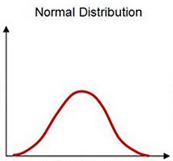
The key to preparing for Black Swans rests in understanding the way events are statistically distributed over time. Unlike the normal distribution found in many phenomena, such as SAT scores, other phenomena follow what is known as a power law distribution, with many small events and few large events. Think forest fires. Black Swan provided a compelling account of the problem of over-relying on normal distributions to explain the world. For problems defined by “fat tail” power laws that have outlier events way out on the tail one would not find on a normal distribution, sooner or later an event at the end of that tail is going to hit, and it’s going to be big. So, planning for some policy problem based on a normal distribution can lead to under-preparation if in fact the problem follows a power law distribution.

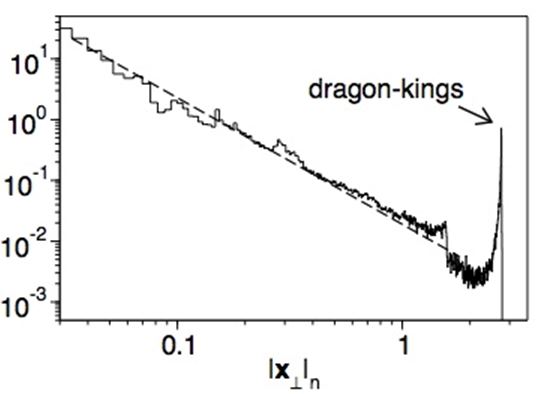
Well, here’s the thing–it’s worse than that. A recent article by Didier Sornette of the Department of Physics and Earth Science at ETH Zurich, Dragon-Kings, Black Swans and the Prediction of Crises, discusses what he calls “life beyond power laws,” meaning “the existence of transient organization [of a system] into extreme events that are statistically and mechanistically different from the rest of their smaller siblings.” In short, he documents the existence of “genuine outliers,” events which don’t even follow the power law distribution. (In the power law graph shown above, sprinkle a few dots way out to the right of the chart and off the line.) The Black Swan event isn’t really an outlier, in other words, because it follows the power law and is simply an event way out on the tail. Genuine outliers violate the power law–they are even “wilder” than what would be predicted by the extrapolation of the power law distributions in their tails. A classic example is Paris–whereas all the populations of all other cities in France map well onto a power law, Paris is a genuine outlier. But Sornette documents that other such outliers exist in phenomena as varied as financial crashes, materials failure, turbulent velocities, epileptic seizures, and earthquakes. He calls such events Dragon Kings: dragon for “different kind of animal” and king to refer to the wealth of kings, which historically has been an outlier violating power law distributions of the wealth of their citizens. (Dragon Kings are also mythical Chinese shapeshifting deities ruling over water, as well as the name of some pretty good Chinese restaurants in cities around the U.S. according to Yelp.)
So, what causes Dragon Kings? Sornette’s theory is complex, but boils down largely to instances when, for whatever reason, all of the feedback mechanisms in a system harmonize in one coupled, self-reinforcing direction. Massive outlier earthquakes, for example, are the result of “interacting (coupled) relaxation threshold oscillators” within the earth’s structure, and massive outlier financial crashes are the result of “the unsustainable pace of stock market price growth based on self-reinforcing over-optimistic anticipation.”
What’s the lesson? The key to Dragoon Kings is that they are the result of the same system properties that give rise to the power law, but violate the power law because those properties have become arranged in such a way as to create severe instability in the system–a systemic risk of failure. When all feedback in the system has harmonized in the same self-reinforcing direction, a small, seemingly non-causal disruption to the system can lead to massive failure. As Sornette puts it: “The collapse is fundamentally due to the unstable position; the instantaneous cause of the collapse is secondary.” His assessment of the financial crash, for example, that, like other financial bubbles, over time “the expectation of future earnings rather than the present economic reality that motivate[d] the average investor.” What pops the bubble might seem like an inconsequential event in isolation, but it is enough to set the collapse in motion. “Essentially, anything would work once the system is ripe.” And the financial system keeps getting ripe, and the bubbles larger, because humans are essentially the same greed-driven creatures they were back centuries ago when the Tulip Bubble shocked the world, but the global financial system allows for vastly larger resources to be swept into the bubble.
The greater concern for me, however, lies back in the physical world, with climate change. Sornette did not model the climate in his study, because we have never experienced and recorded the history of a genuine outlier “climate bubble.” But the Dragon King problem could loom. We don’t really know much about how the global climate’s feedback systems could rearrange as temperatures rise. If they were to begin to harmonically align, some small tipping point–the next tenth of a degree rise or the next ppm reduction in ocean water salinity–could be the pin that pops the bubble. That Dragon King could make a financial crisis look like good times….
The New Jersey Supreme Court Discovers Ecosystem Services, Just in Time for Climate Change
Valuing ecosystem services—the streams of benefits functioning ecosystems provide to human populations—has become a powerful theme in natural resources management research and policy, but not so much yet in hard law to apply. The problem has not been with the ecosystem services that are obvious and well registered in markets—crops, recreation, timber, and water supply to name a few. We have plenty of law surrounding services like those. Rather, ecosystem services such as groundwater recharge by wetlands, storm surge protection by coastal dunes, and pollination by wild honeybees are not bought and sold in markets and thus suffer from a classic Tragedy of the Commons dilemma. People get that these are valuable benefits in a big picture sense, but incorporating these values in law—whether in protective regulations, performance standards, incentives, or in core principles of property law—has proven difficult. Yet with climate change looming as a threat to property in general—increased flooding, drought, storm surges, and other threats are not far into the future—it seems that there would be some urgency to incorporating ecosystem services ideas into property law.
One big step in that direction has come from a recent decision by the New Jersey Supreme Court regarding how much compensation beachfront owners are due when the state plops sand dunes on their property. See Borough of Harvey Cedars v. Karan, 70 Atlantic Rep. 524 (NJ 2013). Like many states, New Jersey (with federal help) spends considerable money shoring up the shore, so to speak, by importing sand to beaches subject to erosion. Sometimes these projects go further, in the form of constructing massive dunes on the beach to, in the court’s words, “serve as a barrier-wall, protecting homes and businesses…from the destructive fury of the ocean.” In other words, the idea is to create or supplement the dune ecosystem to enhance the flow of one very valuable ecosystem service—stopping storm surges. And after Hurricane Sandy, there’s not a person in New Jersey who doesn’t get that.
Well, maybe there are a few. There’s another ecosystem services that’s pretty valuable to beachfront owners—their view of the beach! You can see the problem already—higher dunes mean less view. So when the federal, state, and local governments embarked on a dune project in Long Beach Island, some property owners resisted. The project involved purchasing perpetual easements from the beachfront owners and constructing a 22-foot dune system the length of the beach. The local borough was more than willing to provide compensation for the easement, and most property owners were happy to have the dunes. One couple, however, decided not to sell. The borough exercised its power of eminent domain and took the easement from them anyway. Things got interesting when it came time to decide how much “just compensation” was due to the property owners.
This situation involves what is called a “partial taking” of property. If the borough had taken title to the entire property, the owners and the government would have argued over the fair market value of the entire parcel, which while contestable is fairly easy to determine within a reasonable range the same way appraisers estimate home values for loans. It’s trickier when the government is taking only part of the property (in this case the easement), because one has to determine the value of what was taken as well as the impact on the value of what remains. For over a century, New Jersey law allowed the government to offset the losses to the property owners for that “remainder” (in this case the diminished view) with the benefits the owners receive from the public project that required the partial taking (in this case the protection from the ocean), but only if the benefits were “special benefits” the owner received independent of the “general benefits” the project provides to the public at large. At the trial level in the case, the trial court ruled that the protection benefits from the dune project were general benefits, which meant the jury could not include them as offsets. Under that approach, the jury awarded the owners $375,000, and the appellate court affirmed. As is easy to imagine, if the government had to pay every beachfront owner a sum like that–and there were a lot of owners who refused to participate in the project–the project would have been dead in the water (no pun intended). (Note: I’m going to stay away from the part of the story involving public vilification of the recalcitrant owners, like when Governor Christie called them “knuckleheads.”)
The New Jersey Supreme court turned the case into an opportunity to ditch the outdated special benefits/general benefits doctrine. After a very careful review of the history and policy of the doctrine, the court concluded that “the terms special and general benefits do more to obscure than illuminate the basic principles governing the computation of just compensation in eminent domain cases.” Instead, the court ruled, “just compensation should be based on non-conjectural and quantifiable benefits, benefits that are capable of reasonable calculation at the time of the taking.”
From there the court made some rather obvious but refreshing observations about the dune project, as in “without the dune, the probability of serious damage or destruction to the [owners’] property increased dramatically over a thirty-year period,” and thus it is “likely that a rational purchaser would place a value on a protective barrier that shielded his property form partial or total destruction.” Seriously, this is not rocket science—if you want your house standing in 30 years, deal with the dunes!
The court sent the case back to the trial court with instructions that “at that trial, the Borough will have the opportunity to present evidence of any non-speculative, reasonably calculable benefits that inured to the advantage of the [owners’] property at the time of the taking.” In other words, calculate the value of the ecosystem services the dunes provide to beachfront owners. That trial never took place, however, because the parties settled – the borough paid the owners one dollar in compensation (and covered $24,000 of their attorneys fees). One can reasonably assume the property owners saw the writing on the wall.
The Karan case is a huge development for the law of ecosystem services. Not only did the court recognize the inherent value of the dunes, it gave that value firm legal status. One can anticipate many public infrastructure projects in the future as part of climate change adaptation, many of which will require use of or impacts to private property. As with the Long Beach Island dune project, one can hope that many of these infrastructure projects will rely on restoration, enhancement, or creation of natural ecosystems such as dunes, wetlands, and riparian habitat. Certainly just compensation will be due to the property owners, but at least in New Jersey the calculation of just compensation will include recognition of and valuation of the ecosystem services provided by those ecosystem-based projects.
Law 2050 Is Back – Starting with a huge round of thanks to my guest speakers
My one-month unannounced break from posts is over–Law 2050 is back! I would say the break was voluntary, but grading 61 1L Property exams, hosting six relatives over the holidays, and reading an enormous stack of papers from my 45 Law 2050 students kind of got in the way of blogging, with good reason.
Before I dig into my backlog of possibly interesting posts about the future of the law, the legal profession, and legal education, I want to thank all of the guest speakers who made the Law 2050 class a success. Based on the probing reviews my students compiled, you all truly had an impact and deserve recognition for being willing to share your time with the students to better prepare them for entering the profession during these transformational times. On behalf of them, and from my heart as well, THANK YOU! The honor roll follows in order of appearance:
Law firm managing partners discuss the state of the practice
- Ben Adams – Baker Donelson
- Richard Hays – Alston & Bird
- Stephen Mahon – Squire Sanders
Corporate in-house counsel discuss the drivers of change
- Reuben Buck – Cisco
- Jim Cuminale – Nielson
- Cheryl Mason – Hospital Corporation of America
Scenario Building Case Study: Climate Change
- Prof. David Hess – Vanderbilt Sociology Department
- Prof. Jonathan Gilligan – Vanderbilt Environmental Sciences Department
Legal Project and Process Management
- Larry Bridgesmith – ERM Legal Solutions
- Marc Jenkins – Cicayda
- Dan Willoughby – King & Spalding
Law firm associates discuss life in the modern law firm
- Ashley Bassel – Bass Berry
- Daniel Flournoy – Waller Lansden
- Sarah Laird – Bradley Arant
- Chris Lalonde – Nelson Mullins
Measuring Lawyer Performance
- Paul Lippe – Legal OnRamp
Alternatives to the Big Law model
- Walt Burton – Thompson Burton
- Eric Schultenover – Counsel on Call
Legal Technology Case Study
- Michael Mills – Neota Logic
Scenario Building Case Study: The Bioengineered Superhuman
- Prof. Michael Bess – Vanderbilt History Department
Implementing LEAN Law
- John Murdoch – Bradley Arant
- Prof. Nancy Lea Hyer – Vanderbilt’s Owen Graduate School of Management
Capstone Lecture: The Future of the Legal Industry
- Prof. Bill Henderson – Indiana University-Bloomington Law School
More posts to follow soon…
Final assignment in my Law 2050 class – How would you answer these questions?
The final class session in Law 2050 was yesterday. It has been a blast, and now that I can reflect on it I plan several wrap-up posts. For now, though, how would you answer the three prompts I assigned for the final paper:
1. Congratulations—I have hired you as my speech writer! The Dean has asked me to deliver a talk to the incoming 1L class next year at the beginning of the academic year. He has asked me to summarize the most important themes covered in the Law Practice 2050 class, offer advice to the new law students about how to approach their legal education with those themes in mind, and inspire them to begin thinking about what they can do to best position themselves to enter and succeed in the “new normal” of legal practice in three years. Please draft the speech for me. (suggested length: 1500 – 2000 words)
2. Congratulations again—the Dean has appointed you to be the new student representative to the Law School Curriculum Committee! The Law School is considering how to innovate its curriculum to respond to the “new normal” in the legal industry and best position students to enter and succeed in legal practice over first 10 years of their careers. Please prepare a memo for the Committee with your ideas. Be specific: What courses and other curricular components do you propose? What would be their content and format? How would they be delivered? Who would teach them? What would be the work product and other expectations? How would they be graded or otherwise evaluated? How would students benefit from them? What are the goals? (suggested length: 1000 – 1500 words)
3. Write a letter to yourself to be opened in five years. Tell yourself the steps you plan to take to best position yourself to be where you aspire to be in your legal career five years from now. I will mail this to you in five years. (suggested length: whatever you decide)
Brainstorming About the Law of Superhumans
The press of the end of the semester and a trip to attend a conference in France sapped my Law 2050 blogging energy the past several weeks, but that wouldn’t have been the case if I were I a superhuman. A what? Am I joking? Well, maybe for now, yes, but what about in 20 or 30 years? If Vanderbilt History Professor Michael Bess is right, in the not too distant future advances in genetics, pharmaceuticals, and bionics will make possible previously unimaginable configurations of human physical and mental enhancements. In short, it will not only be possible, but likely inevitable, that humanity will transform itself into what today we would consider a civilization of superhumans.
Bess has been working on a book project called Superhuman Civilization: Life in a Bioengineered Society, in which he meticulously documents and projects the path of human enhancement technology and explores its potential social impacts. Having heard about his research, I invited Bess to guest lecture in my Law 2050 class as a way of stimulating my students to think about how technological change is a force of legal change and, consequently, a source new legal practice issues. In what was a TED-quality presentation, Bess had the class spellbound as he laid out the current and emerging advancements in epigenetics, cognitive drugs, robotics, neuroscience, and other fields which, when combined, make it easy to envision the rise of a superhuman civilization. Drugs will make us stronger, faster, smarter…better at everything. Bionics will allow us not only to restore sight, but also to expand the normal spectrum of human sight, control our mood, and defy current physical limits. Genetics will allow us to go beyond playing with genes to alter physical traits to manipulating the epigenetic expressions of our DNA without changing our DNA. When you put it all together, the possibility of substantially enhanced humans becoming the norm does not seem like science fiction at all.
So what’s the connection to legal change? As Bess says on his website, “all these technologies – even the most apparently sensible and benign ones – will destabilize key aspects of our social order, as well as our understanding of what it means to be human.” He argues that “contemporary society is dangerously unprepared for the dramatic changes it is about to experience, down this road on which it is already advancing at an accelerating pace.” That sounds like a recipe for a swarm of legal issues.
Indeed, we had about 20 minutes to brainstorm with Bess about potential legal issues, and once we got rolling we could have gone on for hours. How will society regulate access to and use of these enhancements? Will some interests argue against allowing their development in the first place? How will the existence of superhuman enhancements affect employment discrimination, police practices, education, liability, insurance, damage calculations, and a host of legal questions. What will happen to the “reasonable person” standard of care? What is negligence in a world of superhumans? Intent? How will intellectual property in enhancement technology be handled? Will there be new forms of violence? Will the concept of “family” evolve as people live to be well over 100 as a routine and 150 becomes the new 40? How will society treat people who refuse enhancement for religious or other reasons?
It would take a superlawyer to anticipate all the potential legal issues that could emerge during the rise of superhumans. Indeed, that’s an interesting concept–the superlawyer! Or the superdoctor. Or the super anything. Will people design themselves for certain superhuman “packages,” leading to even greater differentiation in society?
And here’s the question most appropriate for the thrust of Law 2050: How many superlawyers will the world need, if the world consists of nothing but superhumans? That’s a good question! I plan to get a copy of Bess’s book the day it is off the presses to see what answers it might offer.
Learning from My Students in Law 2050
My Law 2050 class has moved into group presentations (format explained here), the first round being their assessments of new companies and business models emerging in the “new normal.” In two days of presentations, so far we’ve heard about a wide variety of fascinating developments: Axiom, QuisLex, Neota, MetricStream, Yusin & Irvine, Pangea, CEB, Clerky, Onit, MyCase, and Legal Outsourcing Partners. Also, one of my students, Christine Carletta, wrote an insightful description and assessment of Lex Machina as a post on the JETLaw blog for Vanderbilt’s Journal of Entertainment and Technology Law. I couldn’t be more pleased with how the students are engaging with their projects and the class in general!
Twitter Made Me Do It! – New Legal Issues Emerging from Advances in the Science of Social Networks
Advances in neuroscience and genetics have opened up profound and difficult legal issues regarding individual behavior. For example, before her tragic death the late Jamie Grodsky published a set of stunningly good articles on the impacts of genetics science on environmental law and toxic torts, and my colleague at Vanderbilt, Owen Jones, heads a vast research project on neuroscience and the law.
But at the other end of the spectrum, rapid advances are also underway in how we understand crowd behavior, and there are legal issues waiting to boil over. Like many of the issues covered in Law 2050, these advances are the direct result of the Big Data-computation combo, in this case aimed at the science of social networks (and I’m not just talking about the NSA…uh-oh, probably by just saying that they’ll start following my posts!). Of course we all know that Big Brother and even our friends and businesses are snooping through our social media. As the International Business Times reported earlier this week, for example, insurance companies scour claimant’s social media posts at the time of the accident to detect fraud, admissions of fault, and so on. My focus here is different–it’s on how we can learn what an individual does from studying his or her social network behavior, not just what he or she communicates to it (see here for a great summary of legal issues surrounding the latter).
For example, researchers studying the equivalent of Twitter in China, Weibo, reached findings about the flow of emotions in social network suggesting that anger spreads faster than does joy. As they summarize their paper‘s findings:
Recent years have witnessed the tremendous growth of the online social media. In China, Weibo, a Twitter-like service, has attracted more than 500 million users in less than four years. Connected by online social ties, different users influence each other emotionally. We find the correlation of anger among users is significantly higher than that of joy, which indicates that angry emotion could spread more quickly and broadly in the network. While the correlation of sadness is surprisingly low and highly fluctuated. Moreover, there is a stronger sentiment correlation between a pair of users if they share more interactions. And users with larger number of friends posses more significant sentiment influence to their neighborhoods. Our findings could provide insights for modeling sentiment influence and propagation in online social networks.
It’s only a matter of time before clever lawyers start using similar techniques to inform questions of intent, motive, reputation, liability, and so on. For example, if it could be shown that a person’s social media network flared up with anger (e.g., hostile comments or rumors about a spouse) shortly before the person committed a crime, that could prove influential in determining motive. Similarly, social network analytics could be used to measure the reputation impact of alleged libel or slander, consumer confusion in trademark infringement claims, and market perceptions in shareholder derivative claims–basically, anything that involves crowd behavior. Of course, there will also be a swarm of related legal issues such as privacy, data breaches, and admissibility in legal proceedings. So, just as scientific advances at the genetic and brain level are fueling legal issues regarding the individual, so too are advances in the science of social networks likely to open up new legal issues regarding crowds as crowds as well as their impacts on individuals.
What You Get When 45 Law Students Brainstorm About Legal Futures
Last week my Law 2050 class moved into a group project phase. I’ve divided the 45 students into six groups. Each group is exploring a pair of legal future topics grouped under two themes: (1) emerging legal technologies and practice models, and (2) future legal practice scenarios. The six paired topics are:
|
Group |
Tech/Industry Theme |
Practice Scenario Theme |
|
1 |
Outsourcing |
Environment and energy |
|
2 |
Legal process management |
Social and demographic |
|
3 |
Legal risk management |
Economic and financial |
|
4 |
Routinized and expert systems |
Health and medicine |
|
5 |
Legal prediction |
Data and privacy |
|
6 |
New legal markets | Other technologies |
Each group member prepared a proposed set of specific research projects fitting the group’s topics, and last week they pitched them to their groups. Each group selected 3-4 projects for each topic. They are exploring the viability of their tech/practice model selections and of their practice development selections. Later in the semester the groups will present their findings to the class as a whole.
Last week, the groups selected their final set of research projects and gave a quick summary to the class. I was quite impressed with the breadth and depth of their selections:
Future Practice Development Topics: synthetic organs, bitcoins, robotic surgery, student loan debt relief, Cloud computing, Google glass, 3-D printing, Dodd-Frank aftermath, crowdfunding, sea level rise, cybersecurity standards, carbon sequestration, space law & asteroid mining, virtual real estate, ocean-based power sources, biometric identification, water rights issues, genetically pre-fabricated children, natural disaster law, AI decision making, majority-minority America, same sex marriage, LGBTQIA rights, mass human migration, the sharing economy.
Legal Tech and Practice Models: QuisLex, Yuson & Irvine, LPO security breach issues, rebundling of LPO functions, My Case, Onit, Clerky, Axiom, Lex Machina, Casetext, Clearspire, Lawyer Up, Jury Verdict Analyzer, Kiiac, Neota Logic, healthcare compliance software.
I’m looking forward to what they have to say about each of these!
The Law and “Ultrafast Extreme Events” – Is it Possible to Regulate “Machine Ecology” If it Moves Faster than the Human Mind Can React?
In a fascinating new article in Nature’s Scientific Reports, researchers describe a “machine ecology” humans have built through which we have ceded decisionmaking across a wide array of domains to technologies moving faster than the human mind can react. Consider that the new transatlantic cable underway is being built so we can reduce communication times by another 5 milliseconds, and that a new chip designed for financial trading can execute trades in just 740 nanoseconds (that’s 0.00074 milliseconds!), whereas even in its fastest modes (flight from danger and competition) the human mind makes important decisions in just under 1 second. As the article abstract suggests, the proliferation of this machine ecology could present as many problems as benefits:
Society’s techno-social systems are becoming ever faster and more computer-orientated. However, far from simply generating faster versions of existing behaviour, we show that this speed-up can generate a new behavioural regime as humans lose the ability to intervene in real time. Analyzing millisecond-scale data for the world’s largest and most powerful techno-social system, the global financial market, we uncover an abrupt transition to a new all-machine phase characterized by large numbers of subsecond extreme events. The proliferation of these subsecond events shows an intriguing correlation with the onset of the system-wide financial collapse in 2008. Our findings are consistent with an emerging ecology of competitive machines featuring ‘crowds’ of predatory algorithms, and highlight the need for a new scientific theory of subsecond financial phenomena.
One has to wonder how we can design regulatory mechanisms that will prove effective in controlling “ultrafast extreme events” and how legal doctrine will handle issues of liability, property, and contract when such events are moving at nanosecond speeds beyond human recognition. Indeed, the article’s authors focus on the financial system, and observe that the extent to which the thousands of UEEs their research has detected as occurring during the financial crisis were actually “provoked by regulatory and institutional changes around 2006, is a fascinating question whose answer depends on a deeper understanding of the market microstructure.” I’d love to see how Congress tees up that committee hearing!
Law’s “New Normal” as Seen Through the Eyes of Law Students
As I mentioned in my last post, my Law 2050 class recently featured two panels of speakers, one consisting of large law firm managing partners and the other of large corporation in-house counsel. I identified four major themes that struck me as dominating the discussions: (1) the improving profile of “Medium Law,” (2) the impacts of volatile lateral partner movement, (3) the in-house counsel’s quest for value, and (4) law firm financial structure as an obstacle to innovation.
I had my students–there are 45 enrolled in the class–prepare “reaction papers” for the combined panels, in which they were free to comment on what they heard however they wished. I had held off on my post until they handed in the papers so as not to influence their reactions. Remarkably, however, the four themes I discussed in my post were recurrent themes in the student papers. But there were others that dominated their discussions and which revealed something about how law students are approaching the so-called “new normal.”
- The students were struck by the different emphasis the two panels placed on quality versus efficiency in the “value” calculus. While both panels placed importance on both value components, the students perceived that the managing partners emphasized selling quality while the in-house counsel emphasized buying efficiency. The in-house counsel were fairly blunt in this respect, which made a deep impression on the students.
- The in-house counsel panel discussed the “disaggregation” theme extensively, with one panelist describing how legal matters are unbundled and farmed out to a variety of service providers. As this counsel put it, “I hire everything from $30 an hour lawyers to $1500 an hour lawyers–I find the right rate for the right service.” Although this struck the students as a sound business model, they were also struck by how much workload that places on the in-house counsel to herd all the cats. It’s like trying to be your own general contractor when building your new home. The students thus saw the potential value in Legal Project Management service providers, several of which will be appearing on panels later in the semester.
- Indeed, many of the students asked why law firms can’t essentially reinvent themselves to house all of the unbundled services under one roof and charge out each of the various services at competitive market rates. Good question! Indeed, next week we will be hearing from some firms that have taken some steps in that direction.
- Probably the most introspective and personal theme that ran through the papers had to do with training–as in how will they receive it. Let’s face it, the old model, for all its flaws now under the microscope, was a wonderful training ground for young lawyers. They got to see all the bricks in the litigation or transaction wall as it was constructed, and could observe high quality legal work all around them. My students expressed concern that they will not have that same opportunity as legal services are unbundled and farmed out to multiple providers and as their value comes under close scrutiny by clients and their own firms. Remarkably, many said they’d gladly take reduced salaries over their first few years at a firm if that meant they’d receive formalized and extensive training as the quid pro quo.
- Finally, many of the students questioned the continuing viability of US legal practice restrictions. They wondered whether large US firms can compete with the more financially liberated UK firms in the global market, and whether state licensing restrictions really have a rational basis for practice fields that are national in scope. Although the panelists opined that change on this front would be very slow to come, the vibe from the students was that it can’t come fast enough for them.
I have to say that I was quite impressed by how deeply and insightfully my students thought about these issues. Of course, their main concern is about getting employment after law school, which many of the 3Ls have already secured, but my sense is that after hearing from our two panels they have a better handle on what employment in the legal industry will be like in this era of transformation.
 Law 2050